
Who Is Liable in A Kentucky Truck Accident? It’s Often More Than Just the Driver
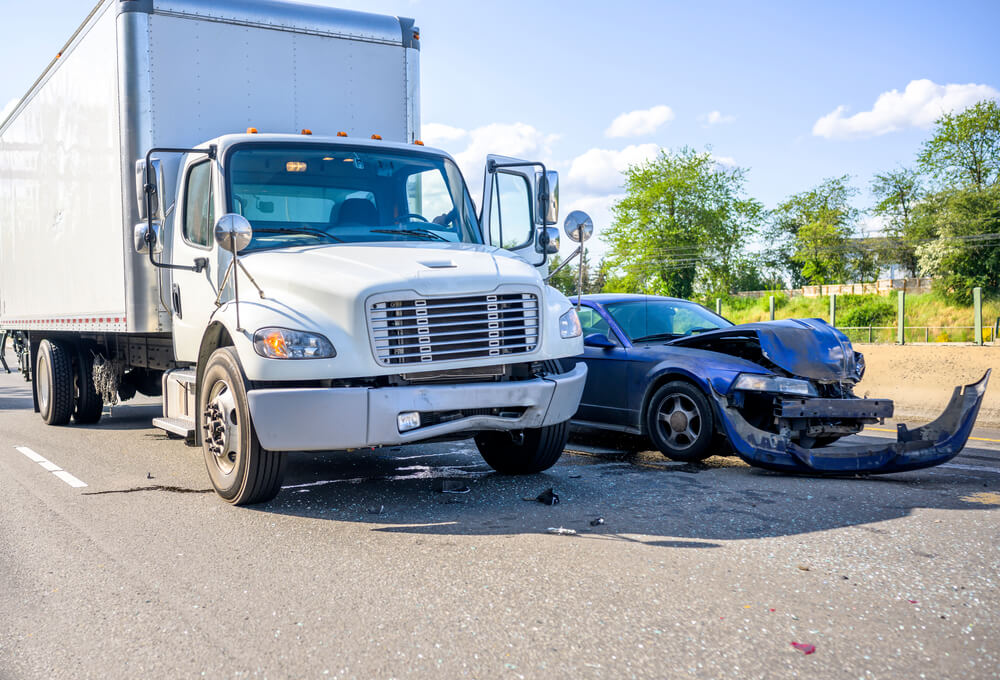
The moments following a severe collision on the Watterson Expressway or I-65 often blur together. Flashing lights, ambulance sirens, and the overwhelming shock of a sudden impact leave victims dealing with immediate physical trauma. When a standard passenger vehicle collides with a fully loaded 18-wheeler, the structural mismatch guarantees that the occupants of the smaller car will suffer catastrophic injuries. As you sit in a waiting room at UofL Health, the physical pain is quickly joined by an urgent financial panic. Medical bills multiply rapidly, and missing weeks of work creates a massive deficit in your household budget.
You might assume that holding the negligent party accountable simply means filing a claim against the person sitting behind the steering wheel. However, commercial vehicle wrecks do not follow the same rules as everyday fender-benders. The trucking industry involves complex layers of corporate ownership, third-party contractors, and federal oversight. Multiple entities coordinate to place a single commercial trailer on the road, meaning liability rarely stops with the driver alone.
How Does Respondeat Superior Affect Trucking Company Liability?
Under the legal doctrine of respondeat superior, a Kentucky trucking company is vicariously liable for collisions caused by their drivers. If a commercial driver causes a crash while acting within the scope of their employment, the employer is legally responsible for the resulting damages.
Vicarious liability represents the primary avenue for securing meaningful compensation after a catastrophic wreck. The legal concept of respondeat superior translates to ‘let the master answer.’ This doctrine recognizes that a business should bear the financial burden for the negligent acts its employees commit while performing job duties. When a truck driver speeds through a red light on the Gene Snyder Freeway to meet a strict delivery deadline, the resulting devastation is ultimately the responsibility of the company that set the schedule.
Establishing vicarious liability shifts the legal focus from an individual driver with limited personal assets to a corporate entity carrying mandatory commercial insurance coverage. These corporate policies carry significantly higher payout limits, ensuring victims have a realistic path to being made whole.
To successfully hold a trucking company vicariously liable, you must demonstrate the following elements:
- The driver was an official employee rather than an independent contractor.
- The collision occurred while the driver was performing work-related tasks.
- The driver was acting within the general time and geographic limits of their employment.
- The company benefited directly from the driver’s actions at the time of the crash.
Can You Sue a Motor Carrier for Negligent Hiring in Kentucky?
Yes, Kentucky law allows injured victims to sue motor carriers directly for negligent hiring, training, or supervision. If a company fails to verify a commercial driver’s background, driving record, or substance abuse history, they carry independent liability for placing a dangerous driver on the road.
Direct corporate negligence is entirely separate from vicarious liability. A trucking company has a strict legal duty to properly vet every applicant before handing them the keys to an 80,000-pound machine. When companies prioritize fast hiring over public safety, they breach their duty of care. Federal mandates, specifically outlined in 49 CFR Part 391, require motor carriers to conduct thorough background checks, review motor vehicle records, and verify previous employment history.
The Kentucky Supreme Court affirmed in MV Transp., Inc. v. Allgeier that a plaintiff can pursue both vicarious liability and direct negligent hiring claims simultaneously. This powerful legal precedent prevents negligent corporations from simply admitting their driver was at fault to hide their own systemic hiring failures.
During the discovery phase of litigation, we aggressively demand the driver’s complete qualification file. We look for red flags that the employer chose to ignore. If the company hired a driver with a recent history of severe traffic violations, failed drug tests, or revoked licenses, the corporation itself becomes a primary defendant for negligent entrustment.
Are Freight Brokers and Shippers Liable for Cargo Shifts?
Freight brokers and shippers share legal liability if they improperly load or overload a commercial trailer. Under federal regulations, cargo must be balanced and secured. If a shipper violates these rules and an overloaded trailer causes a rollover or jackknife, they are responsible for the crash.
The physical dynamics of a semi-truck heavily depend on the weight and distribution of its cargo. A trailer loaded with unbalanced freight becomes a severe rollover risk on curved highway ramps. If the goods are not properly tied down or blocked, the internal load can shift violently during braking, causing the entire tractor-trailer to jackknife across multiple lanes of traffic.
Federal Motor Carrier Safety Administration (FMCSA) cargo securement rules strictly govern how freight must be tied down, distributed, and weighed. The people loading the truck are often third-party warehouse employees, completely separate from the driving company. If a third-party shipper overloads a trailer at a warehouse in Jefferson County and forces the driver to transport it, that shipping company bears direct fault for any resulting disaster.
Identifying shipper negligence involves analyzing several critical documents:
- Bills of lading that show the exact weight and contents of the shipment.
- Weigh station logs recorded shortly before the collision.
- Warehouse loading protocols and video surveillance from the loading dock.
- Post-crash cargo inspection reports from law enforcement.
What Role Do Maintenance Shops Play in Commercial Crashes?
Third-party maintenance shops and mechanics can be held liable for truck crashes if they perform faulty repairs. Failing to replace worn brake pads, ignoring bald tires, or improperly installing commercial vehicle components creates a direct safety hazard that warrants a third-party liability claim.
Commercial trucks endure brutal wear and tear. Traveling over 100,000 miles a year degrades brake lines, steering columns, and suspension systems rapidly. Motor carriers frequently outsource their fleet maintenance to independent commercial garages. When these mechanics take shortcuts, the results are deadly.
A catastrophic brake failure on a steep decline is rarely a sudden, unpredictable event. It is almost always the result of deferred maintenance or faulty repair work. If an independent mechanic signed off on an annual inspection while ignoring severely degraded air brakes, that maintenance shop becomes a liable party.
Proving mechanic liability requires securing the wrecked vehicle immediately. Our legal team sends preservation letters to prevent the trucking company from destroying the vehicle or quietly repairing the defective parts. We extract the electronic data recorder (EDR), commonly known as the black box, which reveals exactly how the vehicle’s mechanical systems behaved in the final seconds before impact.
How Do FMCSA Regulations Establish Truck Accident Fault?
Violations of Federal Motor Carrier Safety Administration regulations act as powerful evidence of negligence. When a driver or company breaks rules regarding hours of service, mandatory rest breaks, or routine vehicle inspections, those violations directly prove a breach of the legal duty of care.
The federal government heavily regulates the interstate trucking industry because the inherent dangers to the public are so severe. The FMCSA establishes rigid rules designed to combat driver fatigue, prevent impaired driving, and ensure proper vehicle maintenance. Proving that a trucking company violated these specific federal rules serves as strong evidence of negligence per se.
Driver fatigue remains one of the leading causes of highway fatalities. The Hours of Service (HOS) regulations dictate exactly how long a driver can operate their vehicle before they are legally required to rest. Unfortunately, corporate pressure often pushes drivers to falsify logs and skip mandatory sleep breaks to deliver freight faster.
Modern commercial trucks are equipped with Electronic Logging Devices (ELDs) that automatically record driving time, engine hours, and vehicle movement. These digital records are significantly harder to falsify than traditional paper logbooks. By subpoenaing the ELD data, routing software, and dispatch communications, we can expose companies that intentionally force exhausted drivers onto Louisville highways.
What Is Pure Comparative Fault Under Kentucky Law?
Kentucky operates under a pure comparative fault system as defined by state statutes. This means a jury will assign a percentage of blame to every party involved in the crash. An injured victim can still recover compensation even if they share partial fault, though their damages are reduced accordingly.
When multiple vehicles are involved in a devastating highway pileup, the blame is rarely absolute. Insurance defense lawyers aggressively attempt to shift the blame onto the injury victim. They will argue that you merged too slowly, braked too abruptly, or were slightly speeding. Fortunately, under KRS 411.182, sharing a minor portion of the blame does not destroy your case.
Pure comparative fault means your final financial award is reduced by your exact percentage of liability. For instance, if a jury determines that a fatigued truck driver is 90% responsible for the collision, but finds you 10% responsible for traveling slightly over the speed limit, you are still entitled to compensation. A $1,000,000 verdict would simply be adjusted to $900,000 to reflect your 10% share of fault.
This legal framework is vital in commercial crash cases. Trucking insurers rely on comparative fault arguments to lowball unrepresented victims. They understand that most people do not comprehend the nuances of apportionment. Having skilled legal representation ensures that the defense cannot unfairly inflate your percentage of fault to protect their own profit margins.
How Does Pure Several Liability Impact Your Financial Recovery?
Kentucky uses a pure several liability standard, meaning each defendant only pays the exact percentage of damages they caused. If a trucking company is 70% at fault and a maintenance shop is 30% at fault, they are each individually responsible for their specific financial share.
Because multiple corporations are often involved in putting a dangerous truck on the road, understanding how damages are paid is essential. Pure several liability means there is no ‘joint’ responsibility among the defendants. A plaintiff cannot force one at-fault party to pay the entire verdict if another at-fault party goes bankrupt.
For example, if a jury awards you damages, the court will apportion fault among every defendant you sued. If the shipping company that improperly loaded the cargo is assigned 40% of the blame, and the motor carrier is assigned 60%, each company’s insurance provider writes a separate check for their specific portion. If you fail to name the shipper in your lawsuit, you permanently lose the ability to recover that 40%.
This rule underscores the absolute necessity of a comprehensive initial investigation. A law firm that merely sues the driver will leave massive amounts of compensation on the table. Every potential defendant—brokers, mechanics, parent companies, and logistics contractors—must be identified and joined in the litigation early in the process.
How Long Do You Have to File a Truck Accident Lawsuit in Jefferson County?
Under the Kentucky Motor Vehicle Reparations Act, you generally have two years from the date of the collision, or two years from the date of your last Personal Injury Protection payment, to file a truck accident lawsuit.
The statute of limitations serves as a rigid expiration date on your legal rights. If you attempt to file a lawsuit in the Jefferson County Circuit Court even one day after this two-year deadline passes, the judge will dismiss your case entirely. The trucking company will owe you nothing, regardless of how severe your injuries are or how clear their negligence was.
While two years sounds like a comfortable cushion, waiting to take action is incredibly dangerous in commercial crash cases. Evidence vanishes rapidly. Federal law only requires trucking companies to preserve driver logbooks and ELD data for six months. If a preservation letter is not sent immediately, the company can legally destroy the very records that prove their driver was violating hours of service regulations.
Prompt legal intervention ensures vital evidence is secured before it disappears. This includes:
- Downloading the tractor’s black box data before the truck is put back in service.
- Securing physical evidence from the wreckage.
- Obtaining witness statements while memories are fresh.
- Subpoenaing dispatch logs and communication records.
Secure Your Recovery with John H. Ruby & Associates
A collision with a commercial vehicle rarely leaves minor damage. When you are dealing with catastrophic trauma, permanent disability, and mounting hospital bills, you cannot rely on an insurance adjuster to treat you fairly. Corporate defense teams immediately begin building a case against you the moment a crash is reported. You need an experienced legal team fighting equally hard to protect your family’s financial future.
At John H. Ruby & Associates, we understand the specific tactics trucking companies use to evade liability. We meticulously investigate every layer of the corporate supply chain to hold every negligent party accountable. Most personal injury attorneys work on a contingency fee basis, which means you do not pay any attorney’s fees unless we win your case. We carry the financial risk of litigation so you can direct your energy toward physical healing.
If you or a loved one has been injured in a commercial vehicle collision in the Louisville area, do not let vital evidence disappear. Contact John H. Ruby & Associates today to schedule a free, confidential consultation. We are ready to review your case, explain your legal options, and aggressively pursue the compensation you are owed.
Frequently Asked Questions
Can I sue the truck driver personally after a crash?
Yes, you can name the truck driver as a defendant in your personal injury lawsuit. However, individual drivers rarely possess the personal assets necessary to cover catastrophic medical bills. This is why experienced legal counsel will simultaneously pursue the trucking company to access their multi-million dollar commercial insurance policies.
What is an electronic logging device (ELD) in a truck accident case?
An ELD is a piece of hardware attached to a commercial engine that automatically records driving time and vehicle movement. This digital data is extremely difficult to manipulate. It provides objective proof if a driver was speeding or violating mandatory federal rest periods just before the collision.
Will my PIP coverage pay for all my medical bills after a semi-truck crash?
No, standard Personal Injury Protection (PIP) in Kentucky only provides up to $10,000 in immediate medical and lost wage benefits. Commercial truck wrecks routinely cause injuries requiring hundreds of thousands of dollars in surgical care. To recover full compensation, you must step outside the no-fault system and file a third-party claim against the liable corporate entities.
How much is a commercial trucking insurance policy worth?
Federal regulations require interstate freight motor carriers to carry minimum liability insurance policies ranging from $750,000 to over $5,000,000, depending on the weight and type of cargo being transported. Hazardous material haulers are required to carry the highest limits. These large policies are designed to cover the extensive damage a fully loaded tractor-trailer can inflict.
Does it matter if the truck driver received a traffic citation?
Yes, a traffic citation for running a red light, speeding, or reckless driving serves as strong initial evidence of the driver’s negligence. However, a citation alone does not guarantee a financial settlement. You still must prove that the specific traffic violation directly caused your injuries and aggressively negotiate with the company’s defense attorneys.


