
Multiple Parties in Kentucky Truck Accidents: Who Can You Sue?
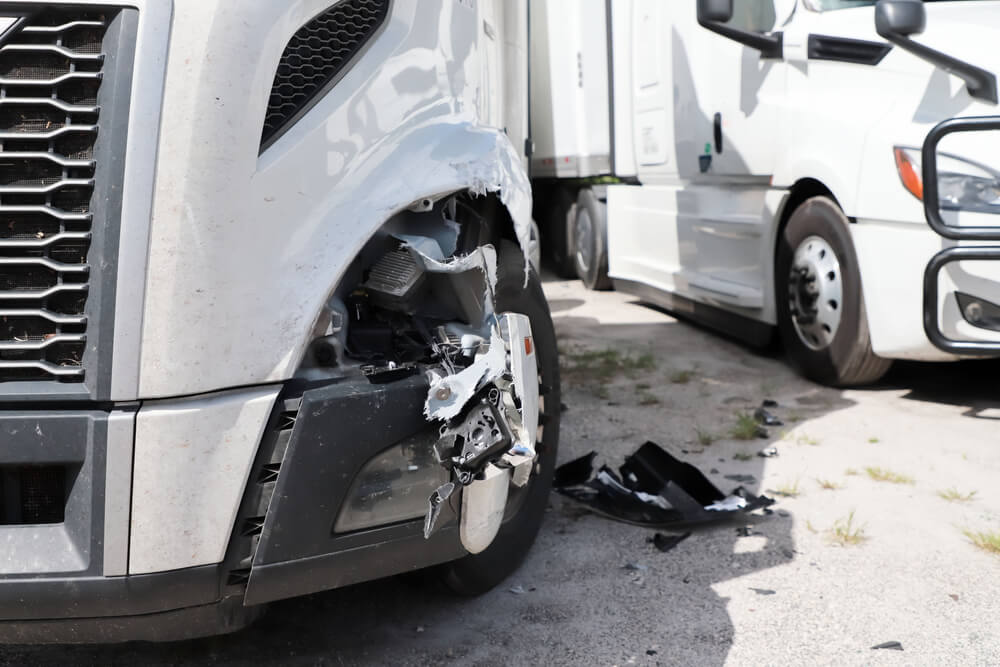
The sheer force of a commercial truck collision on a Kentucky highway like I-65 or I-75 can be devastating. The aftermath is a chaotic scene of twisted metal, flashing lights, and life-altering injuries. For those harmed, the path to recovery is often complicated by the realization that a crash involving a semi-truck is rarely as simple as a two-car accident. Identifying who is truly at fault requires a deep investigation into a complex web of corporate entities, federal regulations, and contractual relationships.
When pursuing a personal injury claim after a commercial vehicle wreck, many victims are surprised to learn that liability often extends far beyond the individual behind the wheel.
Why Are Truck Accident Claims More Complicated Than Car Wrecks?
A collision involving an 80,000-pound tractor-trailer is fundamentally different from a typical passenger car accident. The sheer size and weight disparity mean the potential for catastrophic injuries and fatalities is significantly higher. Beyond the physical devastation, the legal aftermath is also far more complex for several key reasons:
- Federal Regulations: The trucking industry is governed by a thicket of federal laws from the Federal Motor Carrier Safety Administration (FMCSA) as well as state regulations. These rules dictate everything from how many hours a driver can be on the road to maintenance schedules and cargo securement procedures. A violation of these regulations can be a powerful indicator of negligence.
- Multiple Corporate Entities: A single truck on the road can represent a half-dozen different companies. The driver may be an employee of one company, the tractor owned by another, the trailer by a third, and the cargo managed by a fourth. Untangling these relationships is a key part of the legal process.
- Higher Insurance Policies: Because of the immense risk they pose, commercial trucks carry insurance policies with much higher limits than personal auto policies. This means that while the potential recovery is greater, the insurance companies will fight much harder, deploying teams of investigators and lawyers to minimize their payout.
- Complex Evidence: The evidence in a truck accident case goes far beyond skid marks and police reports. It often involves electronic data from the truck’s “black box,” driver logs, dispatch records, maintenance histories, and shipping documents.
Who Are the Potential Defendants in a Kentucky Trucking Accident?
One of the most important steps in a truck accident investigation is identifying every individual or entity whose negligence may have contributed to the crash. The net of liability can be cast wide, and a thorough claim may involve pursuing compensation from several parties simultaneously.
Here are some of the most common defendants in these cases:
- The Truck Driver: The most obvious defendant is the driver. If the crash was caused by driver error—such as speeding, distracted driving, driving under the influence, or violating hours-of-service rules—the driver is personally liable for their negligence.
- The Trucking Company (Motor Carrier): The carrier that employs the driver is almost always a primary defendant. Their liability can stem from their own negligence in hiring, training, or supervising the driver, or they can be held responsible for the driver’s actions under a legal doctrine known as vicarious liability.
- The Owner of the Truck or Trailer: In some cases, the tractor and trailer are owned by separate entities and leased to the motor carrier. If an equipment failure on either the tractor or trailer caused the accident, the owner could be held liable for failing to provide safe, well-maintained equipment.
- The Shipping Company (Shipper or Broker): The company that hired the motor carrier to transport its goods can also bear some responsibility. This is especially true if they negligently hired a trucking company with a known history of safety violations or if their demands pressured the driver to violate safety rules.
- The Maintenance or Repair Company: Many trucking companies outsource their maintenance and repairs to third-party facilities. If a mechanic’s negligent work—such as a faulty brake job or improper tire installation—leads to a mechanical failure and a subsequent crash, that repair shop can be a defendant.
- The Truck or Parts Manufacturer: If the accident was caused by a defective component on the truck, such as faulty brakes, a tire blowout due to a design flaw, or a steering system failure, a product liability claim may be brought against the manufacturer of that part.
- Cargo Loaders: The team responsible for loading the cargo onto the trailer can be held liable if their negligence created a dangerous situation. Improperly secured or unbalanced cargo can shift during transit, causing the driver to lose control or the truck to roll over.
How is the Trucking Company Held Responsible?
While the driver’s actions may have directly caused the collision, the trucking company that employs them is often the central focus of a personal injury lawsuit. A motor carrier’s responsibility goes far beyond simply putting a driver on the road. They can be held liable for a number of reasons:
- Vicarious Liability: Under a legal principle called “respondeat superior,” an employer is legally responsible for the negligent acts of an employee, as long as the employee was acting within the scope of their employment at the time. This means if the driver was on the job and caused the crash through carelessness, their employer is automatically a liable party.
- Negligent Hiring: A trucking company has a duty to vet its drivers. If it hires a driver with a poor driving record, a history of drug or alcohol abuse, or a lack of proper qualifications and that driver causes an accident, the company can be sued for negligent hiring.
- Negligent Training and Supervision: Motor carriers must provide adequate training and properly supervise their drivers. This includes ensuring drivers understand FMCSA regulations, company safety policies, and how to handle their specific vehicle. A failure to do so is a form of direct negligence.
- Failure to Maintain Vehicles: Trucking companies are required by law to systematically inspect, repair, and maintain their fleet of vehicles. If a crash is caused by a known mechanical issue that was not repaired, such as worn brakes or bald tires, the company can be held liable for its failure to maintain its equipment.
What Role Do Shippers and Loaders Play in an Accident?
The journey of a truck’s cargo begins long before the driver turns the key. The parties responsible for loading that cargo play a vital part in the truck’s safety on the road. When cargo is not loaded correctly, it can create a dangerously unstable vehicle.
Improper loading can lead to accidents in several ways:
- Overloading: Every truck has a maximum weight limit. Exceeding this limit can put immense strain on the brakes and tires, making the truck difficult to stop and increasing the risk of mechanical failure.
- Unbalanced Loads: If cargo is not distributed evenly across the trailer, it can make the truck top-heavy and dangerously prone to rolling over, especially on curves or during sudden maneuvers.
- Improperly Secured Cargo: Freight must be properly blocked, braced, and tied down. If cargo comes loose during transit, it can shift dramatically, causing the driver to lose control. In a worst-case scenario, it can fall off the truck and create a hazard for other motorists.
The shipper who owns the goods and the third-party team that physically loaded them can both be named as defendants if their negligence in handling the cargo contributed to the wreck.
Can a Manufacturer Be Sued for a Defective Truck Part?
Not all truck accidents are caused by human error. Sometimes, the truck itself is the problem. When a critical component fails because of a design or manufacturing defect, the consequences can be just as deadly as a driver falling asleep at the wheel.
Product liability claims in truck accident cases often focus on parts where failure is catastrophic:
- Braking Systems: A failure in the air brake system can leave a driver unable to stop an 80,000-pound vehicle.
- Tires: Defective tires that are prone to blowouts or tread separation can cause a driver to instantly lose control.
- Steering Components: A failure in the steering column or linkage can make it impossible for a driver to guide the truck.
- Coupling Devices: The “fifth wheel” that connects the tractor to the trailer must be free from defects. A failure here can cause the trailer to detach on the highway.
In these cases, a claim can be brought against the original manufacturer of the defective part, as well as the manufacturer of the truck and potentially the distributor or retailer in the chain of commerce.
What Kind of Evidence is Important in a Multi-Party Truck Accident Claim?
Building a case against multiple defendants requires a mountain of evidence. A skilled legal team will move quickly to preserve this information before it can be lost or destroyed. Key evidence often includes:
- The truck’s Electronic Logging Device (ELD) or “black box,” which records data on speed, braking, and hours of service.
- The driver’s qualification file and employment history.
- Post-crash drug and alcohol test results.
- The truck’s inspection, maintenance, and repair records.
- Cargo and shipping documents, including the bill of lading.
- Police reports and witness statements.
- Photos and videos from the accident scene.
- Reports from accident reconstruction experts.
What Types of Compensation Can Be Recovered?
The goal of a personal injury claim is to secure compensation, known as damages, for all the losses a victim has suffered. These damages are typically broken down into two main categories.
Economic Damages are for all the verifiable financial losses, including:
- Past and future medical expenses
- Lost wages and income
- Loss of future earning capacity
- Physical and occupational therapy costs
- Costs for home and vehicle modifications
- Property damage
Non-Economic Damages are for the intangible, personal losses that do not have a specific price tag, such as:
- Physical pain and suffering
- Mental and emotional anguish
- Disfigurement and scarring
- Loss of enjoyment of life
- Loss of consortium (for the victim’s spouse)
What is the Time Limit for Filing a Truck Accident Lawsuit in Kentucky?
Kentucky has a very strict deadline, known as the statute of limitations, for filing personal injury claims. In most cases, you have only one year from the date of the accident to file a lawsuit. Because investigating a multi-party truck accident case takes a significant amount of time, it is vital to contact a knowledgeable attorney as soon as possible after the crash to protect your legal rights.
Build a Secure Foundation for Your Future
A serious truck accident can leave you with overwhelming physical, emotional, and financial burdens. While no amount of money can undo the trauma you have endured, a successful legal claim can provide the financial security your family needs to face the future. It ensures you have access to the best medical care and the resources to compensate for lost income and profound changes to your quality of life. If you or a loved one has been injured in a commercial truck accident in Kentucky, the legal team at John H. Ruby & Associates is here to provide the guidance you need. We are committed to conducting a thorough investigation to hold every negligent party accountable and reflect the true lifetime costs of your injuries.
To discuss your case and learn more about your options, schedule a consultation by calling us at 502-373-8044 or reaching out online.


